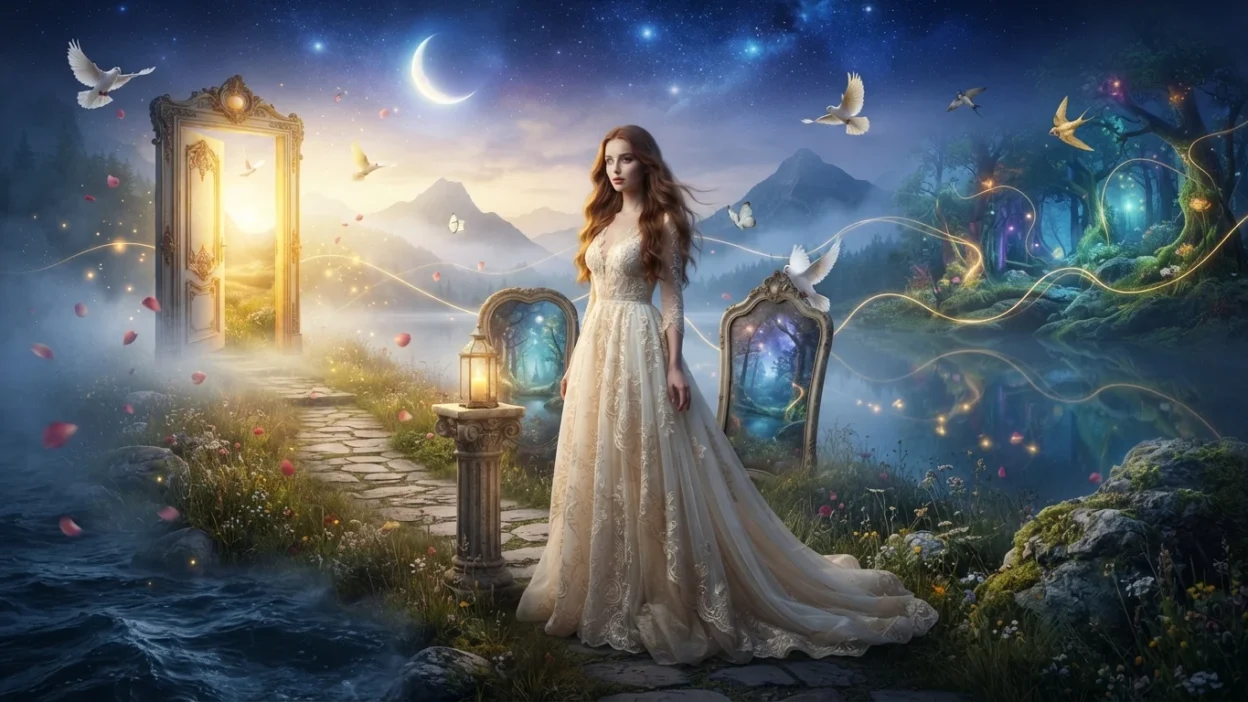
Dream symbolism refers to the meanings people assign to images, events, emotions, characters and experiences that appear in dreams. Across history, dreams have been viewed as messages from the unconscious mind, reflections of everyday experiences, spiritual experiences or meaningful stories created during sleep.
A dream can contain powerful symbols such as water, animals, houses, roads, doors, falling, flying, death, weddings, babies, forests or light. Their meanings are not fixed, however. The same symbol can represent very different things depending on the dreamer’s emotions, personal experiences, culture and circumstances.
Dream Symbolism Meaning (Clear Definition)
Dream symbolism is the interpretation of dream images and experiences as representations of deeper emotions, thoughts, memories, conflicts, hopes or ideas.
Common symbolic themes include:
- Transformation
- Fear
- Freedom
- Love
- Loss
- Growth
- Uncertainty
- Desire
- Memory
- Identity
- Change
- Spiritual curiosity
Dream symbolism is best understood as interpretation rather than a universal dictionary. A symbol’s meaning depends heavily on context.
For example, dreaming about a snake might represent fear for one person and transformation or wisdom for another.
What Does Dream Symbolism Represent?
Dream symbolism can represent aspects of the dreamer’s emotional and psychological world.
A locked door might symbolize an obstacle.
A road may represent a journey or decision.
Water can evoke emotions or uncertainty.
A house may represent one’s sense of self or personal life.
Flying may symbolize freedom or confidence.
Falling may reflect vulnerability or loss of control.
These interpretations are possibilities rather than guaranteed meanings.
Spiritual Meaning of Dream Symbolism
Many cultures have interpreted dreams spiritually.
Dreams may symbolize:
- Spiritual reflection
- Guidance
- Transformation
- Intuition
- Mystery
- Inner awakening
- Connection with the sacred
- Questions about purpose
Some religious traditions regard particular dreams as spiritually meaningful, while others emphasize caution when interpreting them.
Modern spiritual interpretations often view dreams as opportunities for reflection and self-discovery rather than literal predictions.
Biblical / Religious Meaning of Dream Symbolism
Dreams have an important place in several religious traditions.
In the Bible, dreams sometimes appear as vehicles for revelation, warning, prophecy, or symbolic communication. Stories involving Joseph, Daniel, and other biblical figures demonstrate the historical importance of dreams in biblical literature.
Islamic tradition also contains discussions of dreams, including distinctions between different types of dreams and guidance concerning how they should be approached.
Other cultures and religions have developed their own approaches to dreams, from spiritual interpretation to ritual practices.
These traditions should be understood within their specific theological and cultural contexts rather than combined into one universal dream system.
Dream Symbolism in History and Culture
Human beings have interpreted dreams for thousands of years.
Ancient civilizations recorded dreams and attempted to understand their significance. Dream interpretation appeared in ancient Egyptian and Mesopotamian cultures, while Greek and Roman thinkers also debated whether dreams carried divine messages or reflected ordinary mental activity.
Later, religious traditions developed their own approaches to dreams.
In the modern era, psychological theories changed the discussion dramatically.
Sigmund Freud viewed dreams as meaningful expressions connected to unconscious desires and conflicts.
Carl Jung developed a different approach, emphasizing archetypes, symbols, the unconscious, and the process of psychological integration.
Modern neuroscience, meanwhile, investigates dreaming as a complex feature of sleep and brain activity.
There is still no single scientific theory that gives every dream symbol a fixed meaning.
Common Dream Symbols and Their Meanings
Water Dream Symbolism
Water is one of the most common dream symbols.
It may represent:
- Emotions
- Uncertainty
- Change
- Reflection
- Renewal
- The unconscious
Calm water may evoke peace, while turbulent water may mirror emotional intensity.
But personal associations matter. Someone who loves swimming may experience water very differently from someone who fears it.
House Dream Symbolism
A house may symbolize:
- Self
- Identity
- Family
- Personal history
- Emotional life
- Security
Different rooms may be interpreted symbolically as different aspects of one’s inner life.
An unfamiliar house might represent discovering something new about yourself.
Door Dream Symbolism
Doors often symbolize:
- Opportunity
- Transition
- Choice
- Mystery
- Boundaries
- New beginnings
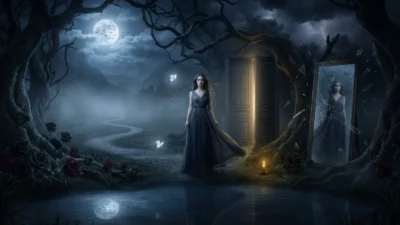
An open door can suggest possibility, while a locked door may represent an obstacle or uncertainty.
Road Dream Symbolism
A road commonly represents:
- Life journey
- Direction
- Decisions
- Progress
- Change
- Personal development
A winding road may symbolize uncertainty, while a clear road may suggest confidence about the future.
Flying Dream Symbolism
Flying dreams are often associated with:
- Freedom
- Confidence
- Escape
- Perspective
- Ambition
- Liberation
The emotion matters greatly.
Flying joyfully may feel liberating, while being unable to control one’s flight could suggest anxiety.
Falling Dream Symbolism
Falling dreams are frequently associated with:
- Vulnerability
- Anxiety
- Loss of control
- Uncertainty
- Fear of failure
- Major life changes
However, not every falling dream has a psychological meaning. Dreams can also incorporate bodily sensations and ordinary sleep experiences.
Snake Dream Symbolism
Snake symbolism is especially complex.
Depending on cultural and personal context, snakes can represent:
- Fear
- Transformation
- Danger
- Healing
- Wisdom
- Renewal
- Hidden concerns
Because snakes shed their skin, they have often been associated symbolically with transformation and renewal.
Bird Dream Symbolism
- Freedom
- Perspective
- Hope
- Communication
- Spiritual aspiration
- Independence
A bird trapped in a cage may symbolize restriction, while a bird flying freely may evoke liberation.
Butterfly Dream Symbolism
Butterflies are commonly associated with:
- Transformation
- Growth
- Renewal
- Beauty
- Freedom
- Personal change
Their transformation from caterpillar to butterfly makes them especially powerful symbols of personal development.
Death Dream Symbolism
Dreaming about death does not necessarily predict an actual death.
Symbolically, death may represent:
- Endings
- Transformation
- Letting go
- Identity changes
- Transition
- The closing of one life chapter
For example, dreaming that an old version of yourself has died may symbolize personal growth.
Wedding Dream Symbolism
Wedding dreams may represent:
- Commitment
- Union
- Partnership
- Integration
- Major transitions
- New responsibilities
They do not necessarily predict marriage.
A wedding may symbolize the joining of different aspects of a person’s life or identity.
Baby Dream Symbolism
Babies can symbolize:
- New beginnings
- Vulnerability
- Creativity
- Responsibility
- Growth
- A developing idea
A baby in a dream may represent something new that requires attention and care.
Fire Dream Symbolism
Fire can have contrasting meanings.
It may represent:
- Passion
- Transformation
- Destruction
- Anger
- Energy
- Renewal
A warm fireplace feels very different symbolically from a destructive wildfire.
Forest Dream Symbolism
- Mystery
- Exploration
- The unknown
- Introspection
- Growth
- The unconscious
Walking through a forest can create a powerful metaphor for entering unfamiliar aspects of oneself.
Mirror Dream Symbolism
Mirrors often represent:
- Self reflection
- Identity
- Self image
- Truth
- Awareness
A distorted reflection may symbolize uncertainty about identity or how one sees oneself.
Light Dream Symbolism
Light commonly symbolizes:
- Hope
- Understanding
- Truth
- Awareness
- Guidance
- Revelation
A light appearing after darkness can represent emotional or spiritual renewal.
Dream Symbolism and Emotions
The emotion of a dream may be more important than the object itself.
For example, dreaming about a dog could mean companionship if the dream feels joyful.
The same dog might represent danger if the dream feels frightening.
Therefore, instead of asking only:
“What does this symbol mean?”
it can be more useful to ask:
- How did I feel?
- What was happening around the symbol?
- What does this object mean to me personally?
- What has been happening in my waking life?
- Did the dream remind me of someone or something?
These questions make dream interpretation more personal and meaningful.
Dream Symbolism and the Unconscious Mind
Psychological approaches often consider dreams a window into aspects of mental life that may not receive much attention during waking hours.
Dreams can incorporate:
- Memories
- Recent experiences
- Emotional concerns
- Fears
- Desires
- Social relationships
- Imagination
This does not mean every dream contains a hidden message.
Sometimes dreams may simply reflect the brain’s complex activity during sleep.
Dream Symbolism and Recurring Dreams
Recurring dreams can be especially interesting.
A repeated dream may reflect a persistent concern, unresolved emotion, recurring fear or simply a recurring pattern of dream imagery.
Common recurring themes include:
- Falling
- Being chased
- Being unprepared
- Losing something
- Returning to school
- Being unable to speak
- Searching for someone
Instead of assuming one universal meaning, look for patterns in the emotions and circumstances surrounding the recurring dream.
Dream Symbolism and Nightmares
Nightmares can symbolize fear or emotional distress, but they are not always symbolic messages.
Nightmares may be influenced by:
- Stress
- Anxiety
- Traumatic experiences
- Sleep disruption
- Medication
- Illness
- Intense emotions
A frightening dream should not automatically be interpreted as a supernatural warning.
Dream Symbolism in Literature and Art
Dreams have inspired some of humanity’s most imaginative literature and artwork.
Writers use dreams to explore:
- Identity
- Memory
- Desire
- Fear
- Fate
- Transformation
- Mystery
Artists often use surreal dream imagery to combine unrelated objects and create symbolic worlds.
A floating house might represent instability.
A broken mirror might suggest fragmented identity.
A staircase disappearing into clouds might symbolize aspiration or uncertainty.
Dream symbolism gives artists a way to represent the strange logic of the inner world.
Frequently Asked Questions About Dream Symbolism
What does dream symbolism mean?
Dream symbolism is the interpretation of dream images, events, and emotions as possible representations of thoughts, feelings, memories, conflicts or personal experiences.
Do dreams have universal meanings?
Not necessarily. Some symbols have widely shared cultural associations, but dream meanings vary significantly between individuals and cultures.
Does dreaming about death mean someone will die?
No. Dreams about death are not reliable predictions. They may symbolically represent endings, transitions, transformation or letting go.
What does water symbolize in dreams?
Water can symbolize emotions, change, uncertainty, reflection or renewal, depending on the dream’s context and emotional atmosphere.
What does flying symbolize in dreams?
Flying is often associated with freedom, confidence, escape, ambition or gaining a new perspective.
Are dreams spiritual messages?
Some religious and spiritual traditions believe certain dreams can have spiritual significance. From a scientific perspective, there is no established method for determining that an individual dream is a supernatural message.
Conclusion
Dream symbolism provides a fascinating way to explore the mysterious relationship between dreams, emotions, memories, imagination, culture and personal meaning.
A door can symbolize opportunity. A road can represent a life journey. Water can evoke emotion. A butterfly can symbolize transformation. Birds can represent freedom. A mirror can suggest self-reflection. Light can symbolize hope and understanding.
But no dream symbol has one meaning that applies to everyone.
The most meaningful interpretation often comes from considering the symbol, emotion, personal experience, cultural background and circumstances together.
Ultimately, dream symbolism reminds us that the mind can tell stories in images when ordinary language is asleep and those images can sometimes invite us to reflect on questions we have not fully explored while awake.