Ghost symbolism represents memory, the past, mystery, grief, unresolved emotions, fear, transformation and the unknown. Ghosts appear throughout mythology, religion, folklore, literature, film and art, often giving symbolic form to things that cannot be easily forgotten or understood.
A ghost does not always symbolize something frightening. It can represent a memory that remains, an unfinished story, a hidden fear, or the emotional presence of someone or something from the past.
Ghost Symbolism Meaning (Clear Definition)
Ghost symbolism refers to the meanings associated with ghosts, spirits, apparitions and supernatural figures in cultural, psychological, spiritual and artistic contexts.
Common meanings include:
- Memory
- The past
- Grief
- Mystery
- Fear
- Loss
- Unresolved emotions
- Transformation
- The unknown
- Mortality
- Hidden truths
- Emotional attachment
A ghost often symbolizes something from the past that continues to influence the present.
What Does Ghost Symbolism Represent?
Ghost symbolism commonly represents the lingering presence of something that is no longer physically present.
This could be a person, relationship, memory, experience, fear, regret or unresolved situation.
For example, a ghost appearing in a story may represent a character’s inability to let go of the past.
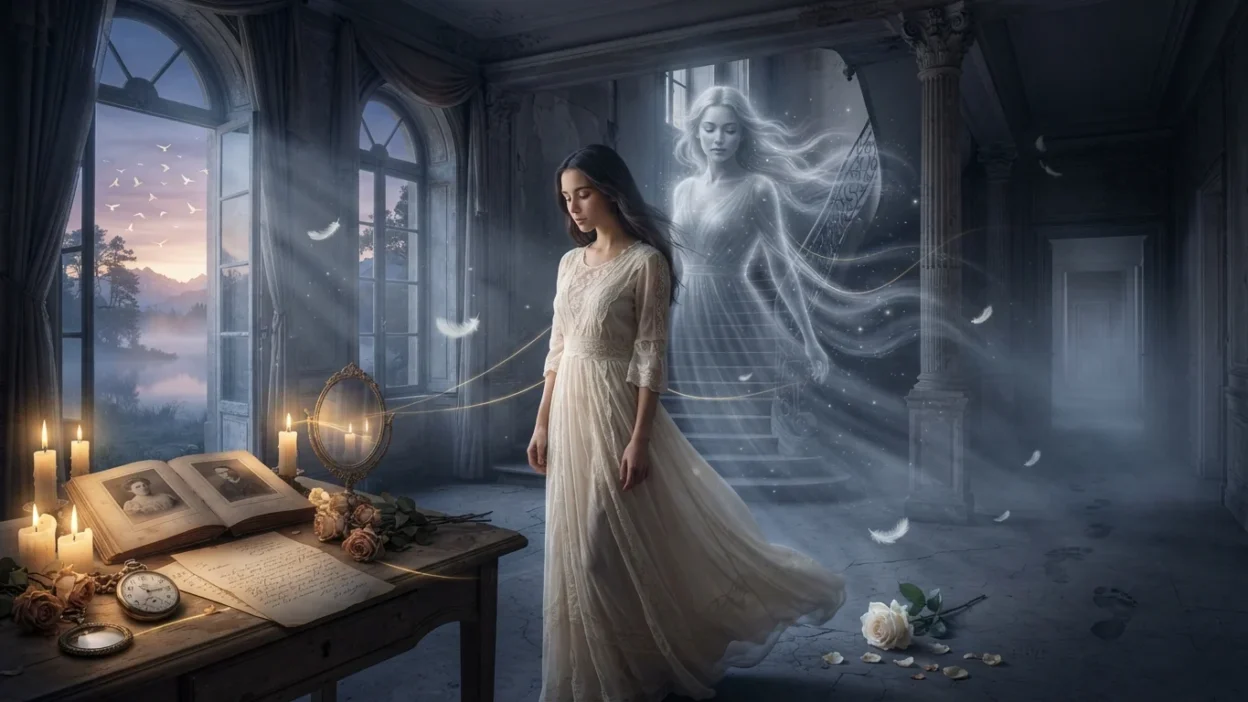
A ghostly house may symbolize memories preserved within a place.
A transparent figure can represent something that is present emotionally but absent physically.
Spiritual Meaning of Ghost Symbolism
Spiritually, ghost symbolism can have many different interpretations depending on cultural and religious beliefs.
It may represent:
- The mystery of existence
- The afterlife
- Spiritual remembrance
- Unresolved attachments
- Transition
- Mortality
- The unknown
- Ancestral memory
- Spiritual questions
- The boundary between life and death
It is important to distinguish symbolic interpretations from claims about actual supernatural events. A ghost in artwork, literature, or a dream can represent an emotional or spiritual idea without necessarily being evidence of a real spirit.
Biblical / Religious Meaning of Ghost Symbolism
Religious traditions have different understandings of spirits, ghosts, and the afterlife.
In Christianity, the Bible discusses spirits, angels, demons, resurrection, death, and the Holy Spirit, but the modern popular image of a wandering ghost does not neatly correspond to one single biblical concept.
Religious symbolism involving apparitions can explore themes such as:
- Mortality
- Judgment
- Spiritual existence
- Resurrection
- The afterlife
- Fear of the unknown
- Divine power
Because Christian traditions differ in their interpretations of supernatural experiences, ghost symbolism is best understood within the specific religious context being discussed.
Ghost Symbolism in History and Culture
Ghost stories have existed across cultures for centuries.
Different societies have developed stories about ancestors, wandering spirits, haunted places, and supernatural beings.
Ghosts have often been used to explain or explore questions surrounding:
- Death
- Grief
- Ancestry
- Justice
- Memory
- Morality
- The unknown
In many traditions, stories about the dead returning are connected with unresolved relationships, unfinished obligations, or the importance of remembering those who came before.
Ghost Symbolism in Literature and Art
Ghosts are especially powerful symbols in literature.
They can represent:
- Guilt
- Memory
- Trauma
- Regret
- History
- Lost love
- Unfinished business
- Social injustice
- Fear
- Mortality
A ghost in a novel may not simply be a supernatural character. It may represent something psychologically or historically that society has failed to confront.
For example, a ghost returning to an old house can symbolize the past refusing to disappear.
In visual art, transparent figures, shadows, empty rooms, fading photographs, and abandoned buildings can all communicate ghostly themes without showing an actual ghost.
Ghost Symbolism in Dreams
Dreams about ghosts can have many meanings, depending on the dreamer’s emotions and circumstances.
Seeing a Ghost
Seeing a ghost in a dream may symbolize memories, unresolved feelings, fear, grief, or something from the past that remains emotionally important.
A Friendly Ghost
A friendly ghost may symbolize comfort, remembrance, acceptance, or a positive connection with the past.
A Scary Ghost
A frightening ghost may represent anxiety, unresolved fears, guilt, uncertainty, or something you are avoiding emotionally.
Talking to a Ghost
Talking to a ghost may symbolize a desire for closure, an unfinished conversation, or an attempt to understand something from the past.
A Ghost Chasing You
Being chased by a ghost can symbolize avoidance. The ghost may represent an emotion, memory, mistake, or difficult experience that you have not fully confronted.
Becoming a Ghost
Dreaming that you have become a ghost may symbolize feeling invisible, ignored, disconnected, powerless or emotionally distant from others.
A Ghost Disappearing
A disappearing ghost may symbolize closure, acceptance, emotional release, or finally letting go of something from the past.
White Ghost Symbolism
A white or luminous ghost often has a softer symbolic meaning than a dark apparition.
It may represent:
- Peace
- Memory
- Purity
- Spiritual mystery
- Remembrance
- Transition
- Emotional closure
In artistic imagery, a translucent white figure surrounded by soft light can symbolize a peaceful memory rather than fear.
Dark Ghost Symbolism
Dark ghost imagery is often associated with:
- Fear
- Mystery
- Grief
- Guilt
- Hidden emotions
- Unresolved conflict
- The unknown
Darkness does not necessarily mean evil. It can symbolize something unseen, misunderstood or unexplored.
Ghost Symbolism and Memory
One of the most meaningful interpretations of a ghost is memory.
People sometimes describe memories as “ghosts of the past” because an experience may be physically over while remaining emotionally present.
Old photographs, abandoned homes, familiar songs and childhood places can all function as ghost symbols.
They remind us that the past can continue to live inside our memories.
Ghost Symbolism and Grief
Ghosts can also symbolize grief.
After losing someone, memories can feel extraordinarily vivid. A person may remember their voice, gestures, smile or favorite places.
In literature and art, ghosts can therefore represent the emotional presence of someone who is physically gone.
This interpretation does not require a supernatural belief. It can simply represent the powerful nature of human memory and attachment.
Ghost Symbolism and Unresolved Emotions
A ghost can symbolize an emotion that has never been fully processed.
It might represent:
- Regret
- Anger
- Guilt
- Sadness
- Lost love
- Unanswered questions
- Unfinished relationships
The ghost becomes a metaphor for something that continues to return until it is acknowledged or accepted.
Ghost Symbolism and the Unknown
Ghosts also represent mystery.
They exist in the space between familiar categories:
Life ↔ Death
Presence ↔ Absence
Reality ↔ Imagination
Known ↔ Unknown
This ambiguity makes ghosts especially powerful symbols in storytelling.
They allow people to explore questions that may never have simple answers.
Ghost Symbolism and Transformation
A ghost can also represent transition.
A transparent figure fading into light may symbolize:
Past → Acceptance → Release → Transformation
This makes ghost imagery useful for stories about personal growth.
Instead of representing something that must be feared, the ghost can symbolize something that must be understood before a person can move forward.
Ghost Symbolism and Haunted Houses
The haunted house is one of the most recognizable ghost symbols.
A haunted house can represent:
- Family history
- Forgotten memories
- Secrets
- Trauma
- The past
- Emotional isolation
- Fear of what lies beneath the surface
An abandoned house may symbolize a life chapter that has ended but still contains emotional memories.
Frequently Asked Questions About Ghost Symbolism
What does a ghost symbolize?
A ghost commonly symbolizes memory, the past, grief, mystery, fear, unresolved emotions, mortality, loss, and the unknown.
What does ghost symbolism mean spiritually?
Spiritually, ghosts may symbolize questions about the afterlife, remembrance, mortality, transition, spiritual existence, and unresolved attachments, depending on the tradition.
What does a ghost represent in dreams?
A ghost in a dream may represent memories, grief, unresolved emotions, fear, regret, or something from the past that continues to affect you.
What does a white ghost symbolize?
A white ghost may symbolize peace, remembrance, purity, emotional closure, transition, or spiritual mystery.
What does a ghost chasing you symbolize?
A ghost chasing you may symbolically represent something you are avoiding, such as fear, regret, unresolved emotions, or a difficult memory.
What does a ghost disappearing symbolize?
A disappearing ghost can represent closure, acceptance, emotional release, or letting go of the past.
Conclusion
Ghost symbolism is powerful because it gives form to things that remain present even after they are physically gone.
A ghost can represent memory, grief, fear, regret, mystery, unresolved emotions or the unknown. In literature and art, it may represent an individual past, a lost relationship, family history or even unresolved social issues.
Not every ghost symbol is frightening. A peaceful ghost surrounded by light can represent remembrance and acceptance, while a fading apparition can symbolize the process of letting go.
Ultimately, ghost symbolism reminds us that the past may leave a lasting presence in our lives, but understanding, remembering and accepting it can help us move toward the future.