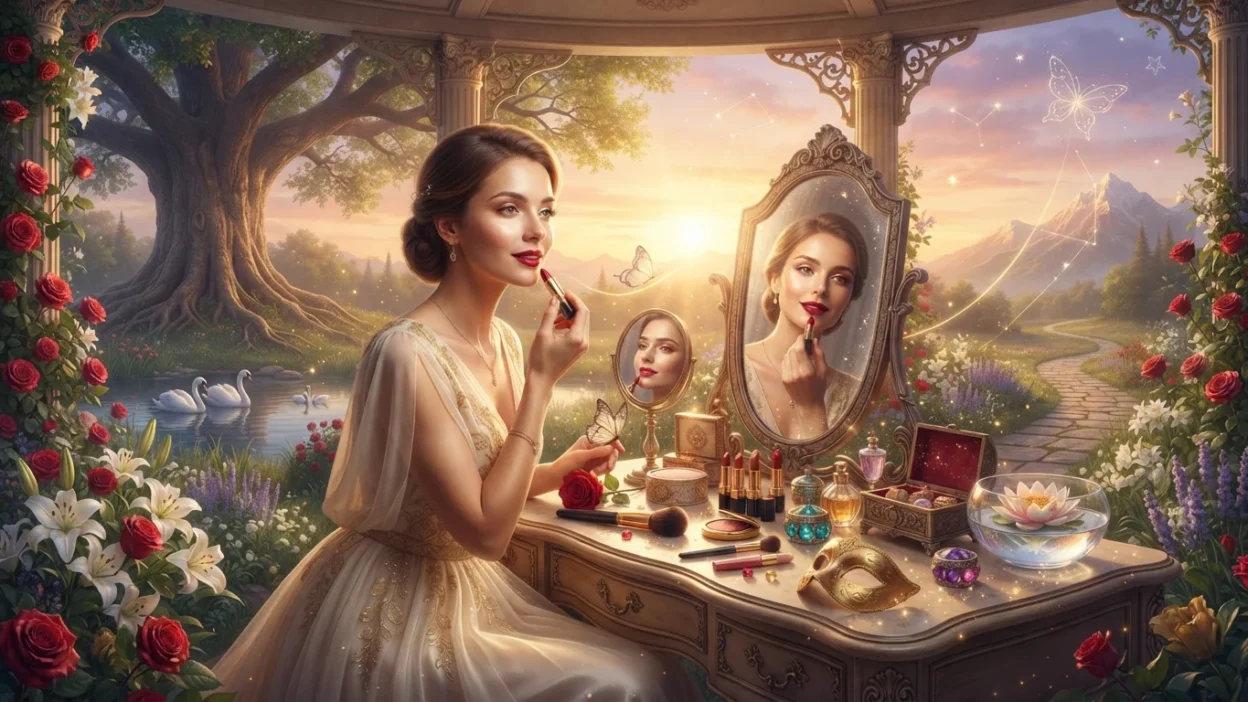
Makeup symbolism represents beauty, identity, confidence, self expression, transformation, creativity, status, protection and the way people choose to present themselves to the world. Makeup can be used to enhance natural features, communicate personality, express cultural identity or create an entirely different visual persona.
Throughout history, cosmetics have carried meanings far beyond appearance. Ancient cultures used pigments for beauty, ceremonies, spirituality, social status and protection. Today, makeup can symbolize empowerment, creativity, individuality, confidence or even the contrast between one’s public image and private self.
Makeup Symbolism Meaning (Clear Definition)
Makeup symbolism refers to the emotional, cultural, psychological, spiritual, and personal meanings associated with cosmetics, colors, styles and the act of applying makeup.
Common meanings include:
- Beauty
- Confidence
- Identity
- Self-expression
- Transformation
- Creativity
- Femininity
- Power
- Status
- Mystery
- Protection
- Cultural identity
- Celebration
- Personal freedom
Makeup can therefore be both a form of adornment and a visual language.
What Does Makeup Symbolism Represent?
Makeup symbolism represents how people express themselves and how they want to be perceived.
One of its strongest meanings is self-expression. Different colors, textures, and styles can communicate moods, personalities, and artistic preferences.
Makeup can also symbolize confidence. For some people, applying makeup is a ritual that helps them feel prepared, polished, or empowered.
Another important meaning is transformation. Makeup can subtly enhance natural features or dramatically change someone’s appearance, making it a powerful metaphor for reinvention.
Makeup can also represent identity. Cultural makeup traditions, ceremonial cosmetics, and personal beauty styles can communicate belonging and heritage.
Spiritual Meaning of Makeup Symbolism
Spiritually, makeup symbolism can relate to beauty, ritual, transformation, protection, identity, and the distinction between external appearance and inner character.
In various cultures, pigments and cosmetics have been used during ceremonies and religious practices.
Spiritual makeup symbolism may represent:
- Transformation
- Ritual
- Beauty
- Protection
- Identity
- Celebration
- Renewal
- Spiritual expression
- Inner and outer harmony
- Personal empowerment
At a deeper level, makeup can symbolize the relationship between who we are internally and how we present ourselves externally.
Biblical Meaning of Makeup Symbolism
The Bible contains references to cosmetics and adornment, particularly in descriptions of beauty, jewelry, clothing, and social presentation.
One well-known biblical reference mentions Jezebel applying cosmetics before appearing at a window. However, the symbolism of cosmetics in biblical passages depends on the larger narrative and should not be interpreted as a universal condemnation of makeup.
Biblical discussions of adornment can involve themes such as:
- Beauty
- Pride
- Status
- Appearance
- Humility
- Character
- Social identity
Biblical teachings also frequently emphasize the importance of inner character over external appearance, making makeup an interesting symbolic contrast between outward presentation and inward qualities.
Makeup Symbolism in History and Culture
Cosmetics have been used for thousands of years.
Ancient Egypt
Ancient Egyptians famously used eye cosmetics such as kohl. Cosmetics were associated with beauty, social identity, and cultural practices, while some forms of eye makeup also had practical and ritual associations.
Ancient Rome
Cosmetics could communicate beauty, wealth, social position, and personal grooming.
Traditional Cultural Makeup
Many cultures use makeup, face paint, or pigments during ceremonies, celebrations, weddings, festivals, and rites of passage.
These traditions can symbolize identity, belonging, spirituality, adulthood, celebration, or community.
Modern Makeup
Today, makeup can be both beauty practice and artistic medium. Social media, fashion, theater, film, and popular culture have expanded the ways makeup can communicate identity and creativity.
Makeup Symbolism in Literature and Art
Makeup is a powerful symbol in literature, theater, cinema, photography, and visual art.
It can represent:
- Identity
- Deception
- Transformation
- Performance
- Mystery
- Social expectations
- Confidence
- Hidden emotions
- Reinvention
- Public versus private identity
In literature, a character applying makeup may be preparing to enter a social role or hide an emotional reality.
In theater, makeup transforms actors into characters, making cosmetics an especially strong symbol of performance and identity.
Makeup Symbolism in Dreams
Dreams involving makeup often relate to identity, confidence, appearance, self-expression, or concerns about how others perceive you.
Applying Makeup
Dreaming of applying makeup may symbolize preparation, self-expression, confidence, or a desire to present yourself differently.
Removing Makeup
Removing makeup may symbolize authenticity, vulnerability, self-acceptance, or revealing your true feelings.
Wearing Too Much Makeup
Excessive makeup in a dream may represent concerns about hiding something, feeling pressured to maintain an image, or worrying about appearances.
Beautiful Makeup
Beautiful makeup may symbolize confidence, creativity, attractiveness, self-esteem, or positive transformation.
Smudged Makeup
Smudged makeup may represent emotional vulnerability, embarrassment, uncertainty, or difficulty maintaining a carefully constructed image.
Buying Makeup
Buying makeup can symbolize preparing for change, exploring a new identity, or investing in yourself.
Someone Else Applying Your Makeup
This may symbolize influence, social expectations, or allowing another person to shape how you present yourself.
Makeup Without a Mirror
This may symbolize uncertainty about identity, self-perception, or how others see you.
Makeup Colors and Their Symbolism
Red Makeup
Red lipstick or eyeshadow symbolizes passion, confidence, desire, courage, energy, and bold self-expression.
Pink Makeup
Pink represents tenderness, romance, femininity, affection, youthfulness, and gentle confidence.
Black Makeup
Black can symbolize mystery, power, sophistication, rebellion, protection, and dramatic self-expression.
White Makeup
White can represent purity, innocence, spirituality, transformation, ritual, or theatrical identity.
Blue Makeup
Blue symbolizes calmness, creativity, trust, communication, intuition, and emotional depth.
Green Makeup
Green represents nature, renewal, growth, balance, creativity, and transformation.
Purple Makeup
Purple can symbolize mystery, spirituality, imagination, luxury, creativity, and individuality.
Gold Makeup
Gold represents wealth, success, confidence, celebration, status, radiance, and something precious.
Makeup Symbolism by Type
Lipstick
Lipstick can symbolize confidence, communication, sensuality, identity, femininity, and bold self-expression.
Because the lips are associated with speaking and communication, lipstick can metaphorically represent having a voice and being willing to express yourself.
Eye Makeup
Eye makeup can symbolize perception, awareness, mystery, intuition, and communication without words.
The eyes are traditionally associated with insight and the ability to see beyond appearances.
Eyeliner
Eyeliner can represent definition, confidence, mystery, focus, and personal style.
Eyeshadow
Eyeshadow can symbolize creativity, mood, imagination, transformation, and artistic expression.
Blush
Blush can represent warmth, vitality, youthfulness, affection, happiness, and emotional openness.
Foundation
Foundation can symbolically represent creating a base, establishing stability, or constructing the outward presentation of identity.
Highlighter
Highlighter can symbolize radiance, confidence, visibility, celebration, and bringing attention to something valuable.
Nail Polish
Although not technically facial makeup, nail color is often part of personal beauty expression. It can symbolize creativity, individuality, confidence, elegance, or mood.
Makeup Symbolism and Femininity
Makeup has historically been associated with femininity in many societies, but its meaning is not limited to women.
For many people, makeup represents:
- Confidence
- Creativity
- Self-care
- Personal identity
- Artistic expression
- Individuality
- Empowerment
Modern beauty culture has increasingly challenged the idea that makeup has one gender-specific meaning.
Makeup can be an artistic medium available to anyone who wants to use it.
Makeup Symbolism and Transformation
Few forms of self-expression demonstrate transformation as visibly as makeup.
A person can change their appearance within minutes through color, contour, texture, and design.
This makes makeup a powerful symbol of:
Change → Reinvention → Confidence → New Identity
Makeup can represent the idea that identity is not necessarily fixed. People can explore different sides of themselves and choose how they want to appear in different situations.
Makeup Symbolism and Masks
Makeup sometimes has a symbolic relationship with masks.
Both can change outward appearance, conceal certain features, or create a particular persona.
However, makeup does not necessarily mean deception.
It can symbolize either:
- Hiding
- Revealing
- Performing
- Expressing
- Transforming
- Protecting
- Celebrating
The meaning depends on the intention behind it.
Frequently Asked Questions About Makeup Symbolism
What does makeup symbolize?
Makeup can symbolize beauty, confidence, identity, self-expression, transformation, creativity, status, mystery, cultural identity, and personal empowerment.
What does makeup symbolize spiritually?
Spiritually, makeup may symbolize ritual, transformation, beauty, protection, identity, celebration, and the relationship between external appearance and inner character.
What does makeup mean in dreams?
Makeup in dreams may symbolize self-image, confidence, identity, preparation, transformation, vulnerability, or concerns about how others perceive you.
What does red lipstick symbolize?
Red lipstick commonly symbolizes passion, confidence, courage, romance, desire, power, and bold self-expression.
What does eye makeup symbolize?
Eye makeup can symbolize perception, intuition, mystery, awareness, creativity, and the desire to communicate through appearance.
What does removing makeup symbolize?
Removing makeup can symbolize authenticity, vulnerability, self-acceptance, revealing one’s true self, or letting go of social expectations.
Conclusion
Makeup symbolism reveals that beauty can function as a language of identity, creativity, confidence and transformation.
Lipstick can symbolize having a voice. Eye makeup can represent perception and mystery. Red can communicate passion, while gold can represent confidence and celebration. Removing makeup can symbolize authenticity, while applying it can represent preparation or transformation.
Across spirituality, history, culture, dreams, literature, art, and modern society, makeup continues to symbolize beauty, identity, confidence, transformation, creativity, power, mystery, self expression and cultural belonging.