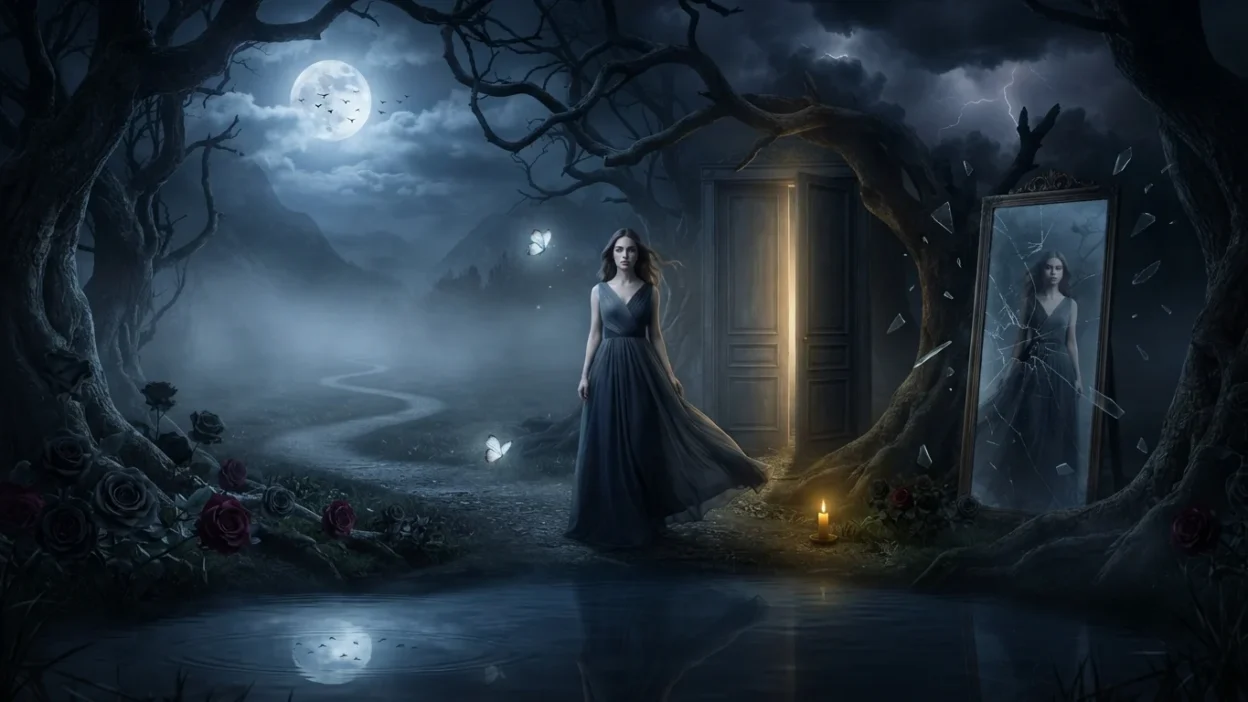
Nightmare symbolism explores the possible meanings behind frightening dreams, including feelings of fear, helplessness, danger, loss, uncertainty and emotional conflict. Nightmares can contain powerful images such as being chased, falling, darkness, monsters, death, storms, trapped spaces or losing someone.
A nightmare does not necessarily predict something bad. Often, its imagery can reflect stress, memories, fears, emotional concerns or ordinary dream processes. The meaning depends heavily on the dreamer’s personal experiences and the emotions present in the dream.
Nightmare Symbolism Meaning (Clear Definition)
Nightmare symbolism refers to the interpretation of frightening dream images, situations, and emotions as possible representations of psychological, emotional, cultural or spiritual themes.
Common nightmare themes include:
- Fear
- Anxiety
- Vulnerability
- Loss of control
- Uncertainty
- Conflict
- Grief
- Transformation
- Suppressed emotions
- Personal insecurity
Not every nightmare contains a hidden message. Sometimes a frightening dream may simply be part of normal dreaming.
What Does Nightmare Symbolism Represent?
Nightmare symbolism often represents the experience of facing something frightening, uncertain or emotionally overwhelming.
For example, being chased may symbolize avoidance or fear.
Being trapped may represent feeling restricted.
Falling may evoke vulnerability or loss of control.
Darkness may represent uncertainty or the unknown.
A storm may symbolize emotional turbulence.
The important question is not simply “What does this symbol mean?” but also:
“What did this symbol make me feel?”
The emotional response can provide important context.
Spiritual Meaning of Nightmare Symbolism
In spiritual traditions, nightmares have sometimes been interpreted as:
- Warnings
- Spiritual struggles
- Tests
- Reflections of fear
- Symbols of transformation
- Encounters with the unknown
However, interpretations differ greatly between religious and spiritual traditions.
A frightening dream should not automatically be considered a supernatural warning or prediction.
For many people, the spiritual value of a nightmare may instead come from using it as an opportunity for reflection, prayer, meditation or personal growth.
Biblical / Religious Meaning of Nightmare Symbolism
Dreams and frightening visions appear throughout religious literature.
In biblical traditions, some dreams and visions are portrayed as meaningful revelations, warnings, or symbolic experiences. At the same time, religious texts also contain teachings emphasizing discernment rather than assuming every dream has divine significance.
Islamic traditions similarly contain discussions about dreams and differentiate between different types of dream experiences. Traditionally, not every disturbing dream is regarded as a message requiring interpretation.
Other religious and cultural traditions have developed their own explanations for frightening dreams.
The safest approach is to understand nightmare symbolism within the specific religious tradition and cultural context rather than assuming every nightmare has the same spiritual meaning.
Nightmare Symbolism in History and Culture
Nightmares have fascinated humanity for centuries.
Ancient cultures sometimes interpreted frightening dreams as messages from gods, spirits, ancestors, or supernatural forces.
In medieval Europe, nightmares were sometimes associated with supernatural beings or spiritual threats.
Later, psychological approaches changed the interpretation of nightmares.
Freudian psychology emphasized unconscious conflicts and desires.
Jungian psychology explored archetypal imagery, the unconscious, and symbolic transformation.
Modern sleep research examines nightmares in relation to emotional processing, memory, stress, sleep patterns, and other factors.
Today, nightmares can therefore be understood through psychological, neurological, cultural, literary and spiritual perspectives.
Being Chased in a Nightmare
Being chased is one of the most recognizable nightmare themes.
It may symbolize:
- Avoidance
- Fear
- Pressure
- Unresolved conflict
- Feeling threatened
- Something you do not want to confront
The identity of the pursuer can be especially important.
Being chased by an unknown figure may create a different emotional meaning from being chased by someone you know.
Rather than assuming a universal interpretation, consider what the person or creature represents to you.
Falling Nightmare Symbolism
Falling dreams may symbolize:
- Loss of control
- Instability
- Vulnerability
- Fear of failure
- Sudden change
- Uncertainty
The sensation of falling can also occur as part of ordinary sleep experiences, so it does not necessarily carry a deeper psychological message.
Darkness Nightmare Symbolism
Darkness can represent:
- The unknown
- Fear
- Uncertainty
- Hidden emotions
- Confusion
- Isolation
A dream that begins in darkness but gradually becomes illuminated can symbolically represent moving from confusion toward understanding.
Monster Nightmare Symbolism
Monsters often appear in nightmares as embodiments of fear.
They may symbolically represent:
- Anxiety
- Threat
- Internal conflict
- Unfamiliar emotions
- Trauma-related imagery
- Something perceived as overwhelming
A monster does not necessarily represent an actual person.
It may instead be the dream’s imaginative way of giving a frightening feeling a visible form.
Death Nightmare Symbolism
Dreaming about death can be extremely disturbing, but it does not mean that death is going to occur.
Death imagery may symbolically represent:
- Endings
- Change
- Transformation
- Loss
- Letting go
- The end of a relationship or life chapter
For example, dreaming about the death of an old version of yourself may metaphorically represent personal transformation.
Being Trapped Nightmare Symbolism
Being trapped can symbolize:
- Helplessness
- Restriction
- Emotional pressure
- Lack of choices
- Feeling stuck
- Fear of losing independence
The location matters.
A locked room, collapsing building, narrow tunnel, or trapped vehicle may create different symbolic associations.
Storm Nightmare Symbolism
Storms are powerful symbols of emotional intensity.
They can represent:
- Chaos
- Fear
- Conflict
- Emotional overwhelm
- Sudden change
- Turbulence
A storm that eventually clears may symbolize survival, resilience, and emotional recovery.
Fire Nightmare Symbolism
Fire can have both destructive and transformative meanings.
In nightmares, fire may represent:
- Anger
- Fear
- Destruction
- Conflict
- Passion
- Sudden change
A burning home, for example, may feel particularly threatening because homes often symbolize safety and personal identity.
Water Nightmare Symbolism
Water can become frightening when it appears as:
- Flooding
- Drowning
- Deep oceans
- Violent waves
- Dark water
Such imagery may symbolize emotional overwhelm, uncertainty, vulnerability, or fear.
Calm water within the same dream may provide an important contrast, suggesting emotional regulation or relief.
Losing Someone in a Nightmare
Dreaming about losing someone can produce intense grief and fear.
It may reflect:
- Fear of separation
- Attachment
- Grief
- Relationship concerns
- Change
- Anxiety about uncertainty
It does not necessarily predict that the person will actually be lost.
Teeth Falling Out Nightmare Symbolism
Dreams about teeth falling out are commonly reported.
Popular dream dictionaries often associate them with:
- Anxiety
- Appearance
- Communication
- Aging
- Vulnerability
- Loss of control
However, there is no universally established psychological meaning for this dream.
Physical sensations, dental concerns, stress, and personal associations can all influence dream content.
Nightmare Symbolism and Anxiety
Nightmares can sometimes occur alongside periods of increased stress or anxiety.
A person experiencing significant pressure may dream about:
- Being late
- Being chased
- Failing
- Being trapped
- Losing something important
- Being unable to escape
These dreams can reflect the emotional tone of waking life without necessarily encoding a precise symbolic message.
Nightmare Symbolism and Trauma
Nightmares can also occur after frightening or traumatic experiences.
Some people experience recurring dreams or nightmares related to past events.
When nightmares are frequent, intensely distressing, or interfere with sleep and everyday life, it can be helpful to speak with a qualified mental-health or sleep professional.
Nightmares are treatable, and experiencing them does not mean that something supernatural is happening.
Recurring Nightmare Symbolism
Recurring nightmares can be particularly meaningful to explore.
Common recurring patterns include:
- Being chased
- Falling
- Being trapped
- Returning to a frightening place
- Losing someone
- Being unable to scream
- Facing an unknown threat
Instead of relying on a fixed dream dictionary, look for repeated emotions and circumstances.
Ask yourself:
- What keeps happening?
- What feeling is always present?
- What changes from one nightmare to another?
- What is happening in my waking life when the nightmares occur?
This can reveal useful patterns.
Nightmare Symbolism and Sleep Paralysis
Some frightening nighttime experiences are not ordinary dreams.
Sleep paralysis can involve temporary inability to move while falling asleep or waking, sometimes accompanied by vivid hallucination-like experiences.
Because these experiences can feel extremely real, people may interpret them as supernatural encounters.
From a medical perspective, sleep paralysis is a recognized sleep phenomenon.
If episodes are frequent or disturbing, discussing them with a healthcare professional or sleep specialist may be helpful.
Nightmare Symbolism in Literature and Art
Nightmares have played an enormous role in literature and visual art.
Writers and artists use nightmare imagery to represent:
- Fear
- Madness
- Guilt
- Isolation
- Desire
- Trauma
- Social anxiety
- The unknown
Dark forests, distorted faces, endless corridors, broken mirrors, monstrous creatures, and impossible landscapes can transform internal fears into visible artistic symbols.
This is one reason nightmare imagery is so powerful: it gives form to emotions that are difficult to describe directly.
Frequently Asked Questions About Nightmare Symbolism
What does nightmare symbolism mean?
Nightmare symbolism refers to interpreting frightening dream images and emotions as possible representations of fear, stress, conflict, uncertainty, memories, or personal concerns.
Do nightmares predict the future?
There is no reliable scientific evidence that nightmares predict future events.
What does being chased in a nightmare mean?
It may symbolize fear, pressure, avoidance, unresolved conflict, or feeling threatened, but the meaning depends on the dreamer’s circumstances.
Does dreaming about death mean someone will die?
No. Death in dreams is not a reliable prediction. It may instead symbolize endings, transitions, loss, or transformation.
Why do people have recurring nightmares?
Recurring nightmares can be associated with stress, anxiety, traumatic experiences, sleep disruption, or recurring emotional concerns. Sometimes they also occur without an identifiable symbolic cause.
Are nightmares spiritual messages?
Some religious traditions allow for spiritually meaningful dreams, but not every nightmare is considered a spiritual message. Interpretations vary significantly.
Conclusion
Nightmare symbolism provides a fascinating way to explore the relationship between fear, emotion, memory, imagination, sleep, culture and personal experience.
Being chased may evoke avoidance. Falling can symbolize vulnerability. Darkness may represent uncertainty. Storms can mirror emotional turbulence. Monsters can give fear a visible form. Death may symbolize endings and transformation. Trapped spaces can represent helplessness or restriction.
But nightmares should not be interpreted through a rigid dream dictionary.
The most meaningful approach is to consider the symbol, emotional response, personal experiences, waking circumstances and cultural background together.
Ultimately, nightmare symbolism reminds us that even frightening dreams can become opportunities for reflection. A nightmare may not be a prediction of what is coming; sometimes it is simply the mind creating an intense story around what already feels frightening, uncertain or unresolved.