Mind symbolism represents thought, consciousness, imagination, awareness, intelligence, perception, memory, creativity, intuition and personal identity. Unlike the physical brain, which can be represented visually, the mind often symbolizes the invisible inner world where thoughts, emotions, ideas, beliefs and dreams exist.
Across philosophy, spirituality, literature, art, and dreams, the mind represents one of humanity’s greatest mysteries: the inner world that shapes how we experience reality.
Mind Symbolism Meaning (Clear Definition)
Mind symbolism refers to the symbolic meanings associated with human thought, consciousness, imagination, perception and inner awareness.
Common meanings include:
- Consciousness
- Thought
- Intelligence
- Imagination
- Creativity
- Memory
- Awareness
- Intuition
- Perception
- Wisdom
- Self-discovery
- Personal identity
The mind often symbolizes the invisible landscape of human experience.
What Does Mind Symbolism Represent?
Mind symbolism primarily represents thought and consciousness.
While the brain is a physical organ, the mind is often understood symbolically as the place where ideas, memories, emotions, beliefs, and perceptions come together.
The mind can therefore represent possibility.
An idea that exists only in someone’s imagination can eventually become an invention, painting, book, business, or life-changing decision.
This makes the mind a symbol of the power to imagine something before it exists.
Spiritual Meaning of Mind Symbolism
Spiritually, the mind can symbolize consciousness, inner awareness, wisdom, reflection, intuition, and transformation.
It may represent:
- Inner peace
- Spiritual awareness
- Consciousness
- Intuition
- Meditation
- Wisdom
- Self-discovery
- Enlightenment
- Inner transformation
- Connection with something greater
In many spiritual traditions, developing awareness of one’s thoughts is considered an important part of personal growth.
A calm mind can symbolize peace, while an awakened mind can represent a new level of understanding.
Biblical Meaning of Mind Symbolism
The Bible frequently discusses the mind, thoughts, understanding, wisdom, and inner transformation.
Biblical themes connected with mind symbolism include:
- Wisdom
- Discernment
- Understanding
- Faith
- Renewal
- Knowledge
- Self-control
- Spiritual transformation
Romans 12:2 is particularly relevant because it speaks of transformation through the renewing of the mind.
In this context, the mind can symbolize the process of changing one’s perspective, values, understanding, and way of living.
Mind Symbolism in History and Culture
The mind has fascinated philosophers and thinkers throughout history.
Ancient philosophical traditions explored questions such as:
- What is consciousness?
- What makes us who we are?
- How do we know what is true?
- Can thoughts shape reality?
- What is the relationship between mind and body?
Different cultures have offered different answers.
In modern society, the mind is commonly associated with psychology, education, creativity, philosophy, meditation, technology, and personal development.
Mind Symbolism in Literature and Art
The mind is one of literature’s richest symbolic landscapes.
Writers use mental imagery to explore:
- Memory
- Dreams
- Identity
- Fear
- Desire
- Imagination
- Inner conflict
- Madness
- Self-discovery
- Consciousness
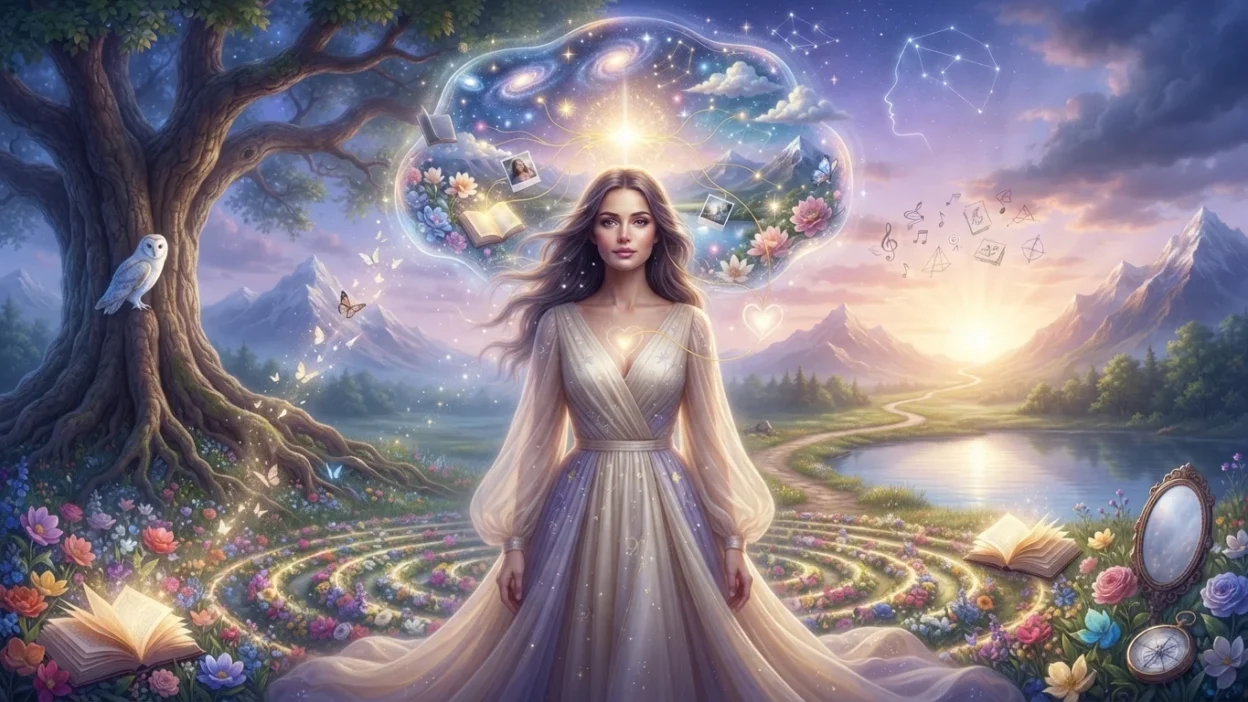
Artists may represent the mind through mirrors, labyrinths, clouds, stars, doors, books, floating objects, dreamlike landscapes, or infinite skies.
A labyrinth, for example, can symbolize a complicated mind filled with questions and conflicting thoughts.
An open door can represent a new idea or realization.
A bright light inside darkness can symbolize insight.
Mind Symbolism in Dreams
Dreams involving the mind can relate to thoughts, worries, memories, creativity, self-awareness, and important decisions.
A Clear Mind
Dreaming of clarity may symbolize understanding, confidence, peace, or resolution.
A Confused Mind
Confusion in a dream may reflect uncertainty, competing choices, stress, or difficulty understanding a situation.
An Overactive Mind
A dream filled with rapidly changing thoughts may symbolize mental stimulation, unresolved concerns, creativity, or emotional overload.
A Peaceful Mind
A calm dream environment may symbolize emotional balance, acceptance, healing, and inner peace.
A Dark Mind
Darkness surrounding the mind may symbolize uncertainty, hidden emotions, fear, or unexplored parts of yourself.
A Bright Mind
A glowing or illuminated mind may represent inspiration, insight, awakening, creativity, or a breakthrough.
Someone Reading Your Mind
Such a dream may symbolize vulnerability, fear of being understood too deeply, intimacy, or concerns about privacy and judgment.
Losing Your Thoughts
This may symbolize confusion, insecurity, fear of forgetting something important, or difficulty communicating your feelings.
Mind Symbolism and Consciousness
One of the deepest meanings of the mind is consciousness.
The mind symbolizes our awareness of ourselves and the world around us.
A symbolic image of an individual standing beneath a vast star-filled sky can represent the enormous relationship between personal consciousness and the universe.
The idea suggests that although each person has an individual mind, human curiosity reaches toward questions much larger than ourselves.
Mind Symbolism and Imagination
The mind is the birthplace of imagination.
Before a building is constructed, an artist creates an image of it mentally. Before a story is written, its world exists inside someone’s imagination.
Therefore, mind symbolism can represent:
- Dreams
- Creativity
- Innovation
- Possibility
- Vision
- Inspiration
- Artistic expression
A mind surrounded by stars and colorful light can symbolize limitless imagination.
Mind Symbolism and Memory
The mind is also strongly associated with memory.
Memories connect our past experiences with our present identity.
Symbolically, the mind can represent:
- Childhood
- Family memories
- Life experiences
- Lessons
- Nostalgia
- Personal history
- Identity
Old photographs, handwritten letters, books, and familiar places can all be used artistically to symbolize the memories held within the mind.
Mind Symbolism and Inner Peace
A peaceful mind symbolizes balance and emotional stability.
Symbolic images of calm water, meditation, clouds, forests, mountains, or open skies can represent a mind free from unnecessary disturbance.
The contrast between a stormy landscape and a calm interior space can symbolize the journey from mental chaos to inner peace.
Mind Symbolism and Personal Growth
The mind changes as we learn.
New experiences can challenge old beliefs and create new perspectives.
For this reason, mind symbolism can represent:
- Learning
- Maturity
- Self awareness
- Transformation
- Wisdom
- Adaptability
- Personal development
An opening flower emerging from a symbolic head or mind can represent new understanding and intellectual growth.
Mind and Heart Symbolism
The mind and heart are frequently represented together.
Symbolically:
Mind → Reason, logic, knowledge, analysis
Heart → Emotion, love, compassion, intuition
Together, they represent the importance of balancing thought with feeling.
A person may need the mind to make a wise decision but the heart to understand how that decision affects others.
This balance is one of the most enduring themes in human symbolism.
Mind Symbolism and Freedom
The mind can also symbolize freedom because thoughts can travel beyond physical limitations.
A person may be physically restricted while still imagining distant places, creating stories, remembering loved ones or dreaming about the future.
For this reason, an open sky, flying birds, or a person standing before a vast horizon can represent freedom of thought and imagination.
Frequently Asked Questions About Mind Symbolism
What does the mind symbolize?
The mind commonly symbolizes consciousness, thought, intelligence, imagination, creativity, memory, awareness, intuition, wisdom, and personal identity.
What does mind symbolism mean spiritually?
Spiritually, the mind may represent consciousness, inner awareness, meditation, intuition, wisdom, enlightenment, and personal transformation.
What does a clear mind symbolize?
A clear mind can symbolize peace, understanding, confidence, wisdom, emotional balance and resolution.
What does a confused mind symbolize?
A confused mind can symbolize uncertainty, conflicting thoughts, unresolved problems, stress, or difficulty making a decision.
What does the mind and heart together symbolize?
The mind and heart together symbolize the balance between reason and emotion, logic and compassion, thought and feeling.
What does an illuminated mind symbolize?
An illuminated mind can represent insight, inspiration, knowledge, creativity, awakening, and a new understanding of life.
Conclusion
Mind symbolism represents the mysterious and powerful inner world of thought, consciousness, imagination, memory, intuition and self awareness.
It can symbolize the ability to imagine new possibilities, learn from experience, question assumptions, understand ourselves, and transform our perspectives.
A clear mind can represent peace. A labyrinth can represent complexity. An illuminated mind can symbolize insight, while an open sky can represent freedom of thought.
Ultimately, mind symbolism reminds us that the way we think influences the way we perceive the world and changing our perspective can sometimes be the beginning of changing our lives.