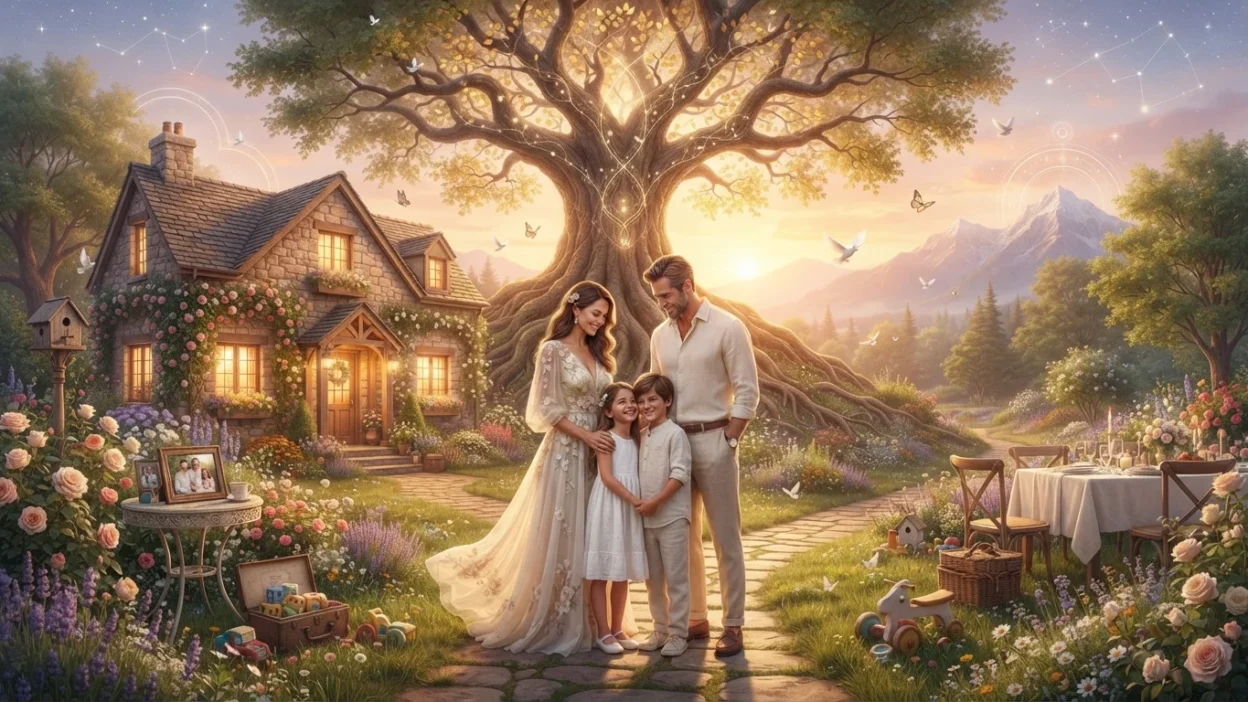
Family symbolism represents love, belonging, connection, protection, loyalty, heritage, support, identity and the relationships that shape who we are. Family is more than a group of people connected by blood or marriage. Symbolically, it represents the emotional roots that give us a sense of belonging and the relationships that influence our values, memories and understanding of life.
Across cultures and generations, family has been represented through homes, trees, circles, photographs, heirlooms, meals and shared traditions. In spirituality, religion, dreams, literature and art, family symbolism often reflects connection, responsibility, unconditional love, ancestry and the desire to protect those we care about.
Family Symbolism Meaning (Clear Definition)
Family symbolism refers to the emotional, spiritual, and cultural meanings associated with family relationships and the bonds between generations.
Family commonly symbolizes:
- Love
- Belonging
- Protection
- Loyalty
- Support
- Heritage
- Identity
- Unity
- Connection
- Responsibility
- Stability
- Shared memories
- Unconditional care
At its deepest level, family symbolism represents the people and relationships that help us understand where we come from and where we belong.
What Does Family Symbolism Represent?
Family symbolism represents connection, belonging, protection, and shared identity.
One of its strongest meanings is love. Healthy family relationships can provide emotional support during both joyful and difficult periods.
Family also represents belonging. Knowing that you have people who care about you can create a powerful sense of security and acceptance.
Another important meaning is heritage. Families pass down traditions, stories, values, languages, recipes, objects and beliefs from one generation to another.
Spiritual Meaning of Family Symbolism
Spiritually, family symbolism represents unconditional love, unity, responsibility, protection, ancestry, and the sacred bonds between people.
Many spiritual traditions view family relationships as opportunities to practice compassion, forgiveness, patience, generosity, and service.
Spiritually, family symbolism can represent:
- Unconditional love
- Unity
- Protection
- Compassion
- Forgiveness
- Ancestry
- Spiritual connection
- Responsibility
- Healing
- Gratitude
Family can also symbolize a person’s spiritual community. In this broader sense, family does not always mean biological relatives. It can include people who provide love, guidance, friendship, and a genuine sense of belonging.
Biblical Meaning of Family Symbolism
Family is an important theme throughout the Bible. Scripture frequently emphasizes love, responsibility, honoring parents, caring for children, supporting relatives, and maintaining strong relationships within the household.
Biblical family symbolism can represent:
- Love
- Unity
- Faith
- Responsibility
- Protection
- Generational heritage
- Compassion
- Commitment
- Fellowship
The family can also represent a place where faith and values are passed from one generation to another.
Biblical teachings about family often emphasize the importance of caring for one another and treating relationships with patience, kindness, respect, and love.
Family Symbolism in History and Culture
Family has been central to human societies throughout history.
Ancestry
Family represents lineage and connection between generations. Stories about ancestors can help individuals understand their heritage and identity.
Family Traditions
Shared meals, celebrations, ceremonies, clothing, recipes, music, and customs help preserve family identity.
Family Homes
The family home often symbolizes safety, memories, belonging, and continuity.
Family Heirlooms
Photographs, jewelry, furniture, letters, and other inherited objects can represent the connection between past and present generations.
Community
In many cultures, the concept of family extends beyond immediate relatives to include extended family, neighbors, elders, and close community members.
Family symbolism therefore often reflects both personal identity and collective cultural identity.
Family Symbolism in Literature and Art
Family is one of the most powerful themes in literature, film, painting, photography, and storytelling.
Stories about families often explore:
- Love
- Loyalty
- Conflict
- Sacrifice
- Forgiveness
- Identity
- Heritage
- Loss
- Reconciliation
- Belonging
In literature, a family home may represent childhood and memory. A family tree may symbolize ancestry and generational connection. A family reunion may represent healing and reconciliation.
In visual art, images of parents and children, family meals, generations standing together, or hands joined in a circle can communicate unity and affection.
Family photographs are particularly powerful symbols because they preserve moments that might otherwise disappear with time.
Family Symbolism in Dreams
Dreaming about family often reflects your emotional connections, memories, relationships, responsibilities, and feelings of belonging.
Happy Family
A happy family in a dream may symbolize love, security, emotional support, harmony, and contentment.
Family Reunion
A family reunion can represent connection, reconciliation, nostalgia, or a desire to reconnect with loved ones.
Family Gathering
A gathering around a table may symbolize unity, communication, shared traditions, and emotional connection.
Family Member From the Past
Dreaming about someone from your family who is no longer part of your everyday life may reflect memories, unresolved emotions, lessons, or nostalgia.
Family Conflict
Arguments or tension within a dream may symbolize unresolved feelings, communication problems, personal boundaries, or emotional stress.
Protecting Your Family
Dreaming about protecting family members can symbolize responsibility, loyalty, love, and the desire to keep important relationships safe.
Losing a Family Member
Such dreams do not necessarily predict an actual loss. They may symbolize fear of change, emotional distance, transition, or anxiety about losing connection.
Starting a Family
Dreaming about starting a family can symbolize new responsibilities, emotional maturity, nurturing instincts, stability, or the desire to build something meaningful.
Modern Meaning of Family Symbolism
Today, family symbolism has expanded beyond traditional definitions.
Family can include biological relatives, adopted family members, blended families, close friends, mentors, and communities that provide genuine support and belonging.
Modern family symbolism can therefore represent:
- Emotional support
- Chosen family
- Acceptance
- Personal identity
- Shared values
- Connection
- Security
- Resilience
- Love
- Community
The idea of chosen family is particularly meaningful because it recognizes that deep emotional bonds can develop between people who are not biologically related.
Symbols Commonly Associated With Family
Family Tree
The family tree is one of the clearest symbols of ancestry, heritage, roots, and generational connection.
House
A house represents safety, belonging, family memories, and emotional stability.
Circle
A circle symbolizes unity, wholeness, equality, and an unbroken bond.
Hands
Holding hands represents support, trust, connection, and togetherness.
Heart
The heart represents love, compassion, affection, and emotional connection.
Photograph
A family photograph symbolizes memories, history, identity, and the preservation of meaningful moments.
Fireplace
A warm fireplace symbolizes comfort, warmth, gathering, hospitality, and family togetherness.
Tree Roots
Deep roots represent ancestry, heritage, stability, and the strength provided by previous generations.
Frequently Asked Questions About Family Symbolism
What does family symbolize?
Family symbolizes love, belonging, protection, loyalty, support, heritage, identity, unity, responsibility, stability, and emotional connection.
Is family symbolism always positive?
Family symbolism is often associated with positive ideas such as love and belonging, but it can also represent conflict, loss, complicated relationships, or unresolved emotional experiences.
What does family symbolize spiritually?
Spiritually, family can symbolize unconditional love, unity, compassion, forgiveness, responsibility, ancestry, protection, healing, and spiritual connection.
What does dreaming about family mean?
Dreaming about family often reflects your relationships, memories, emotional needs, responsibilities, feelings of belonging, or unresolved experiences.
What does a family tree symbolize?
A family tree symbolizes ancestry, roots, heritage, generational relationships, identity, and the connection between past, present, and future.
What does a family gathering symbolize?
A family gathering symbolizes unity, connection, shared memories, communication, celebration, reconciliation, and belonging.
Conclusion
Family symbolism reminds us that our identity is shaped not only by who we are individually but also by the relationships and experiences that connect us to others.
Family can symbolize love and protection, but it can also represent heritage, responsibility, sacrifice, forgiveness, and resilience. A family tree connects us to the past, while children represent the continuation of life and tradition into the future.
Across spirituality, religion, history, dreams, literature, art, and culture, family continues to symbolize love, belonging, protection, unity, identity, heritage, loyalty, support, and connection.
Ultimately, family is not defined only by blood. At its deepest level, family represents the people who make us feel seen, supported, valued, and connected. Whether through biological relationships, chosen family, or community, these bonds can become some of the most meaningful parts of human life.