The cross is one of the most recognized and meaningful symbols in human history. While many people immediately associate it with Christianity, cross symbolism extends far beyond a single religion. Across cultures and centuries, the cross has represented faith, sacrifice, protection, balance, hope and spiritual transformation.
From ancient civilizations to modern society, the cross has served as a powerful emblem of connection between the physical and spiritual worlds. Its simple design carries profound meanings that continue to inspire people around the globe.
Cross Symbolism Meaning (Clear Definition)
Cross symbolism refers to the symbolic meanings associated with the cross as a spiritual, cultural, and philosophical symbol. It commonly represents faith, redemption, sacrifice, divine protection, and the intersection of earthly and heavenly realms.
At its core, the cross symbolizes the meeting point of different forces—human and divine, physical and spiritual, life and eternity.
Quick Symbolism Summary
| Symbolic Meaning | Interpretation |
|---|---|
| Faith | Belief and spiritual devotion |
| Sacrifice | Selflessness and giving for others |
| Redemption | Forgiveness and renewal |
| Protection | Spiritual safety and guidance |
| Hope | Strength during difficult times |
| Balance | Harmony between opposing forces |
| Eternal Life | Spiritual continuity beyond death |
What Does Cross Symbolism Represent?
The cross represents a variety of important spiritual and personal values.
Faith and Devotion
The cross is most commonly associated with faith and commitment to spiritual beliefs. It serves as a reminder of trust, devotion, and religious conviction.
Sacrifice and Selflessness
One of the strongest meanings of the cross is sacrifice. It symbolizes putting the needs of others before oneself and acting with compassion and generosity.
Hope and Strength
It represents perseverance, resilience, and the belief that challenges can be overcome.
Protection and Guidance
Throughout history, crosses have been worn as symbols of protection, divine guidance, and spiritual security.
Unity and Balance
The vertical and horizontal lines of the cross are often interpreted as symbols of balance between heaven and earth, spirit and matter, or the individual and community.
Spiritual Meaning of Cross Symbolism
The spiritual meaning of cross symbolism centers on transformation, enlightenment, and connection with the divine.
Many spiritual traditions interpret the cross as a symbol of:
- Spiritual growth
- Divine guidance
- Inner strength
- Self-sacrifice
- Protection
- Renewal and rebirth
- Connection between heaven and earth
The intersection at the center of the cross is often viewed as a sacred point where physical existence meets spiritual awareness.
Cross as a Symbol of Transformation
Spiritually, the cross reminds individuals that personal growth often requires overcoming challenges and embracing positive change.
Biblical / Religious Meaning of Cross Symbolism
The cross holds profound significance in Christianity and appears in various forms throughout other religious traditions.
Christianity
In Christianity, the cross symbolizes the crucifixion and resurrection of Jesus Christ. It represents salvation, forgiveness, redemption, divine love, and eternal life.
For Christians, the cross serves as a reminder of faith, sacrifice, and God’s grace.
Eastern Christianity
In Eastern Christian traditions, the cross is often viewed as a symbol of victory over sin and death, emphasizing spiritual triumph and renewal.
Ancient Pagan Traditions
Before Christianity, cross-like symbols appeared in various ancient cultures where they represented the sun, nature, life cycles, and cosmic balance.
Other Spiritual Traditions
Many cultures have used variations of the cross to symbolize harmony, protection, and the connection between the earthly and spiritual realms.
Cross Symbolism in History and Culture
The cross has appeared in civilizations around the world for thousands of years.
Ancient Egypt
The Egyptian Ankh, often called the “Key of Life,” resembles a cross and symbolized life, immortality, and divine wisdom.
Ancient Europe
Various cross forms were used as symbols of protection, fertility, and the cycles of nature long before the spread of Christianity.
Medieval Society
During the Middle Ages, the cross became a dominant symbol of faith, appearing in architecture, art, literature, and everyday life.
Cultural Significance Today
Today, the cross remains a universal symbol recognized across cultures, representing spirituality, hope, and moral values.
Cross Symbolism in Literature and Art
The cross has inspired countless works of literature and art throughout history.
In Literature
Authors often use the cross to symbolize:
- Faith and belief
- Sacrifice and redemption
- Moral choices
- Spiritual journeys
- Hope and perseverance
The cross frequently appears in stories where characters experience personal transformation or overcome adversity.
In Art
Artists use the cross to explore themes of spirituality, suffering, compassion, and renewal.
From ancient carvings and stained-glass windows to contemporary artwork, the cross remains one of the most enduring artistic symbols.
Dream Meaning of Cross Symbolism
Dreaming about a cross can have several interpretations depending on the context.
Seeing a Cross
A cross in a dream often symbolizes guidance, protection, and spiritual support.
Carrying a Cross
This dream may reflect personal responsibilities, challenges, or a period of growth and self-discovery.
A Glowing Cross
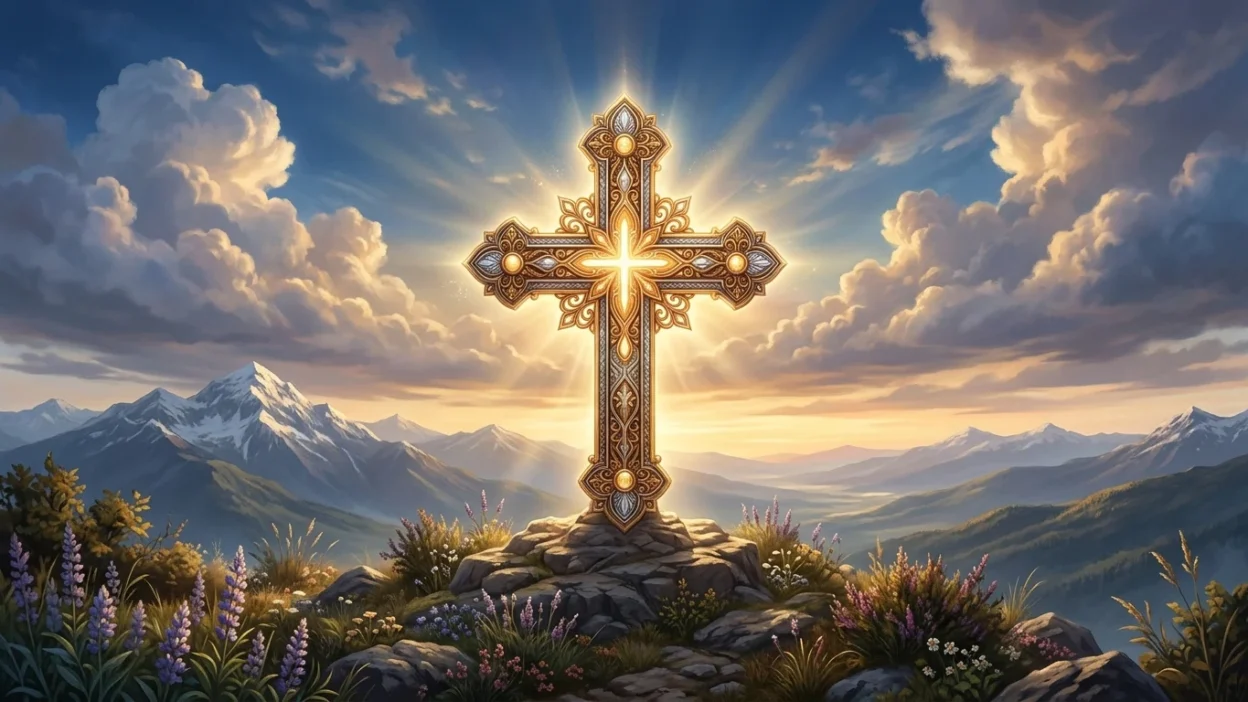
A radiant cross is often interpreted as a sign of hope, divine guidance, and spiritual awakening.
Finding a Cross
Finding a cross in a dream may suggest discovering inner strength, purpose, or renewed faith.
Broken Cross
A broken cross can symbolize spiritual struggles, uncertainty, or the need to reconnect with personal values.
Modern Meaning of Cross Symbolism
In contemporary society, cross symbolism continues to hold significant meaning.
Religious Expression
Many people wear crosses as expressions of faith, devotion, and spiritual identity.
Personal Strength
The cross is often seen as a symbol of resilience, reminding people to remain strong during life’s challenges.
Fashion and Jewelry
Cross designs are widely used in jewelry and fashion, often symbolizing protection, heritage, or personal beliefs.
Memorial and Remembrance
Crosses are frequently used to honor loved ones and symbolize remembrance, peace, and eternal life.
Universal Hope
Beyond religious contexts, the cross is often viewed as a symbol of hope, compassion, and the triumph of good over adversity.
Frequently Asked Questions
What is the main meaning of cross symbolism?
Cross symbolism primarily represents faith, sacrifice, redemption, protection, hope, and spiritual connection.
Is the cross only a Christian symbol?
No. While it is most strongly associated with Christianity, cross-like symbols existed in many ancient cultures and carried various spiritual meanings.
What does a cross symbolize spiritually?
Spiritually, the cross symbolizes divine guidance, transformation, balance, protection, and the connection between the physical and spiritual worlds.
What does dreaming about a cross mean?
Dreaming of a cross often represents faith, guidance, personal growth, protection, or a need for spiritual reflection.
Why do people wear cross jewelry?
People wear cross jewelry as a symbol of faith, protection, remembrance, personal values, and spiritual identity.
Conclusion
Cross symbolism has remained powerful throughout history because it embodies universal themes of faith, sacrifice, hope, protection and transformation. Whether viewed through a religious, cultural or personal lens, the cross continues to inspire people to seek strength, purpose and spiritual connection in their lives.